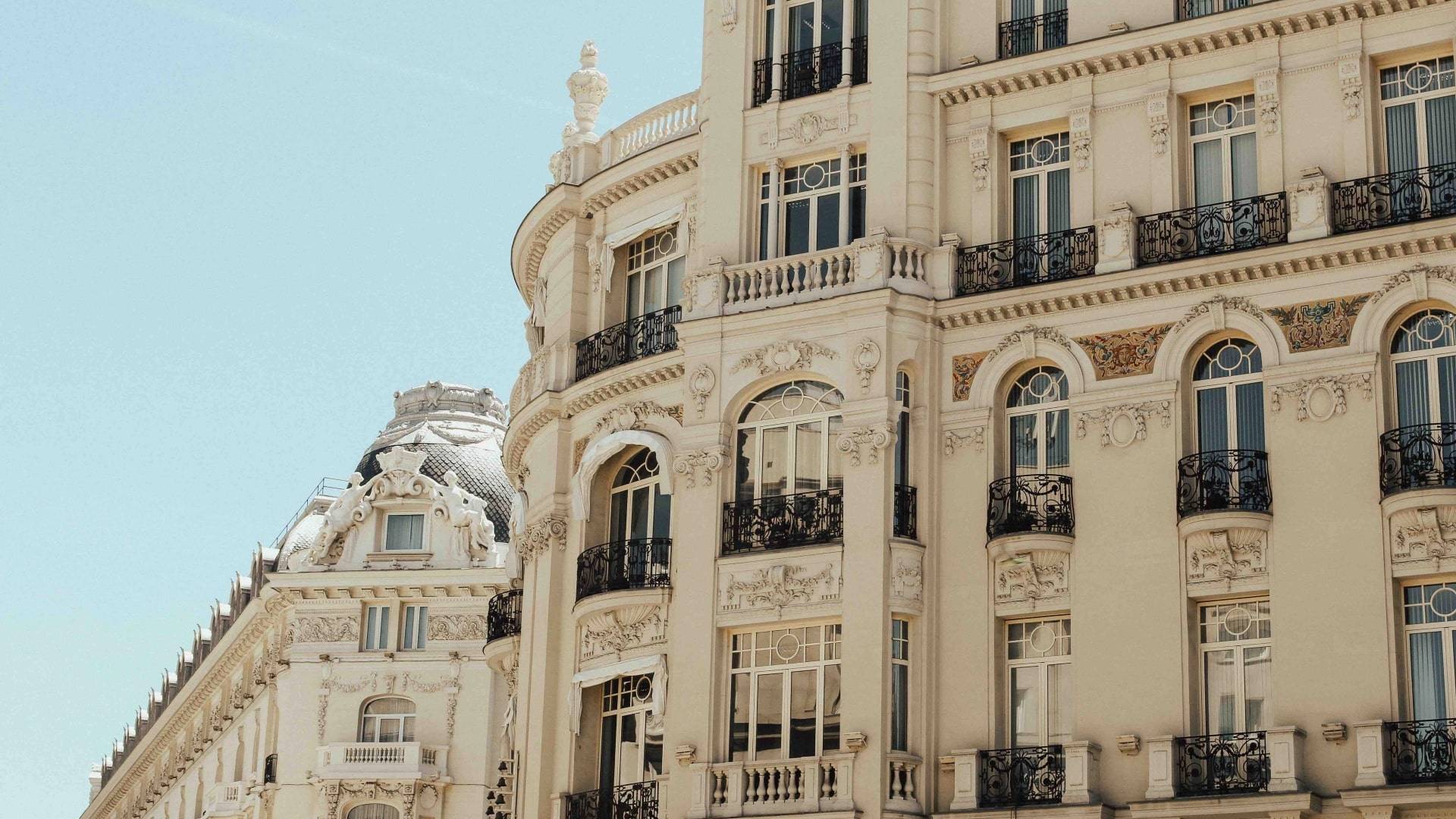
There is in Paris a beauty that no one signs, yet everyone feels. Beneath the stone of the facades, behind the grain of the wood or the softness of the metal, one senses the hand of an artisan. Men and women who, for centuries, have worked matter without seeking glory. They are the true builders of the city.
Their craftsmanship is read in the details. A wrought-iron railing, a barely underlined moulding, the tone of an old parquet floor — everything we often take for décor is in fact the result of a gesture. These gestures, passed down from generation to generation, form a silent language: the language of beauty.
Parisian craft trades are everywhere and nowhere at once. You come across them at the bend of a passageway, in a hidden workshop in the Faubourg Saint-Antoine, or on a restoration site in the Marais. Ironworkers, gilders, stonemasons, cabinetmakers, mosaicists — they carry on a tradition that refuses standardisation. Each tool tells a story, each material demands its own rhythm.
In an age of rapid construction and interchangeable materials, their exacting standards are moving. They do not seek flawless perfection, but the truth of the gesture. A hand-adjusted angle, gilding retouched centimetre by centimetre, a stone put back exactly where it once belonged. These artisans remind us that a place is not only lived in — it is cared for.
Their work contributes to a kind of ecology of beauty. Restore rather than replace, understand rather than conceal. This humble and enduring approach brings meaning back to architecture and to living spaces. In Paris, you see it in the restoration of Haussmann buildings, period storefronts or apartments where what deserves to last is preserved.
This respect for detail also inspires a certain idea of modernity. The most contemporary architects and designers increasingly call upon these skills — not out of nostalgia, but because the human hand, with its irregularities and precision, remains unmatched. True luxury lies not in what is new, but in the continuity of craftsmanship.
At étage.2, we share this sensibility. To understand a property is also to understand those who shaped it. Behind every old door, every staircase, every window, lies a heritage of work, patience and precision. The artisans of beauty do not seek to mark their era — they move through it. And perhaps that is Paris’s secret: a city that ages without ever ceasing to be beautiful.
This site is protected by reCAPTCHA and the Google Privacy Policy and Terms of Service apply.